What if the real cost of AI is not what the platform charges, but what it still requires from the people using it?
In this article, I look at the changing economics of AI inside organizations and the question many companies are going to have to face with more discipline.
The conversation moves beyond licenses, tokens, credits, agents, and consumption models and into the reality underneath the use case:
The time spent prompting, reviewing, correcting, adjusting, validating, and deciding whether the output was actually worth the effort.
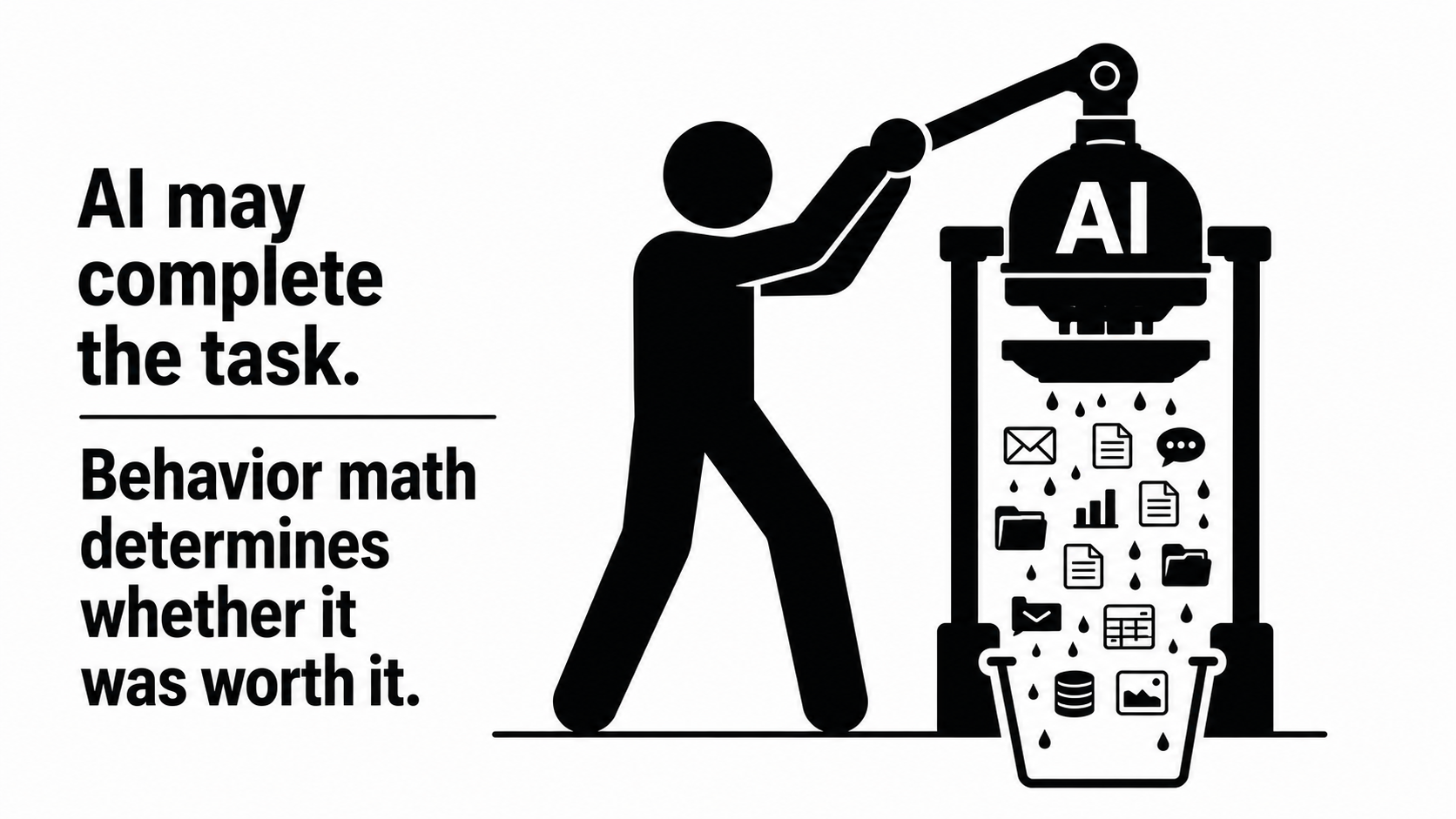
AI may reduce the time it takes to complete a task.
But reduced time is not the same as removed cost.
Who is still involved?
How long are they involved?
What does their attention cost?
What happens when a one-hour task becomes a thirty-minute AI-assisted task, but the employee still has to guide the work, judge the output, and carry the accountability?
At the center of this article is the only question that matters when AI moves from possibility into business math:
Is the juice worth the squeeze?
This is a practical look at AI cost through the lens many organizations are not measuring clearly enough:
The human labor that remains after the technology has done its part.